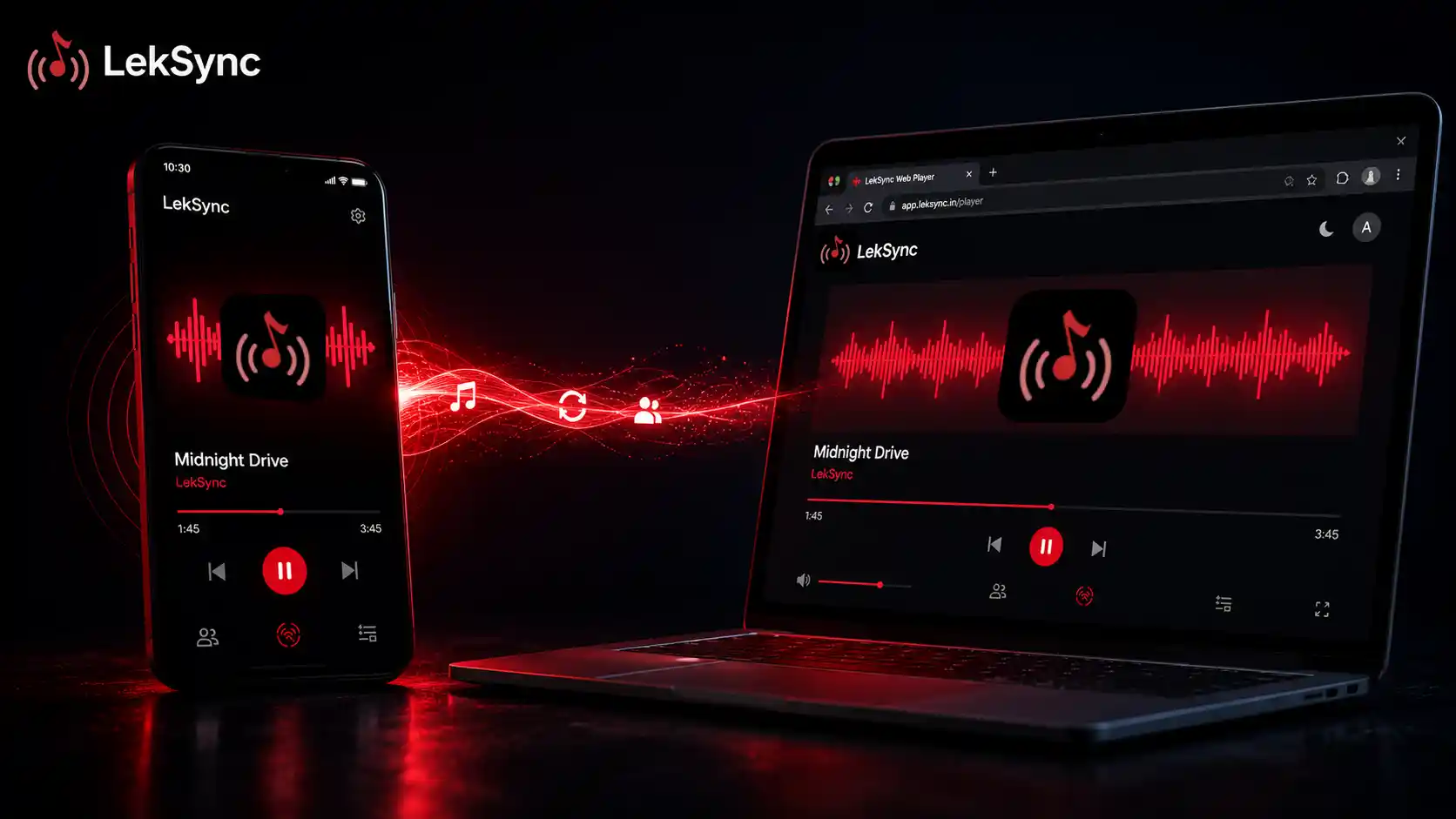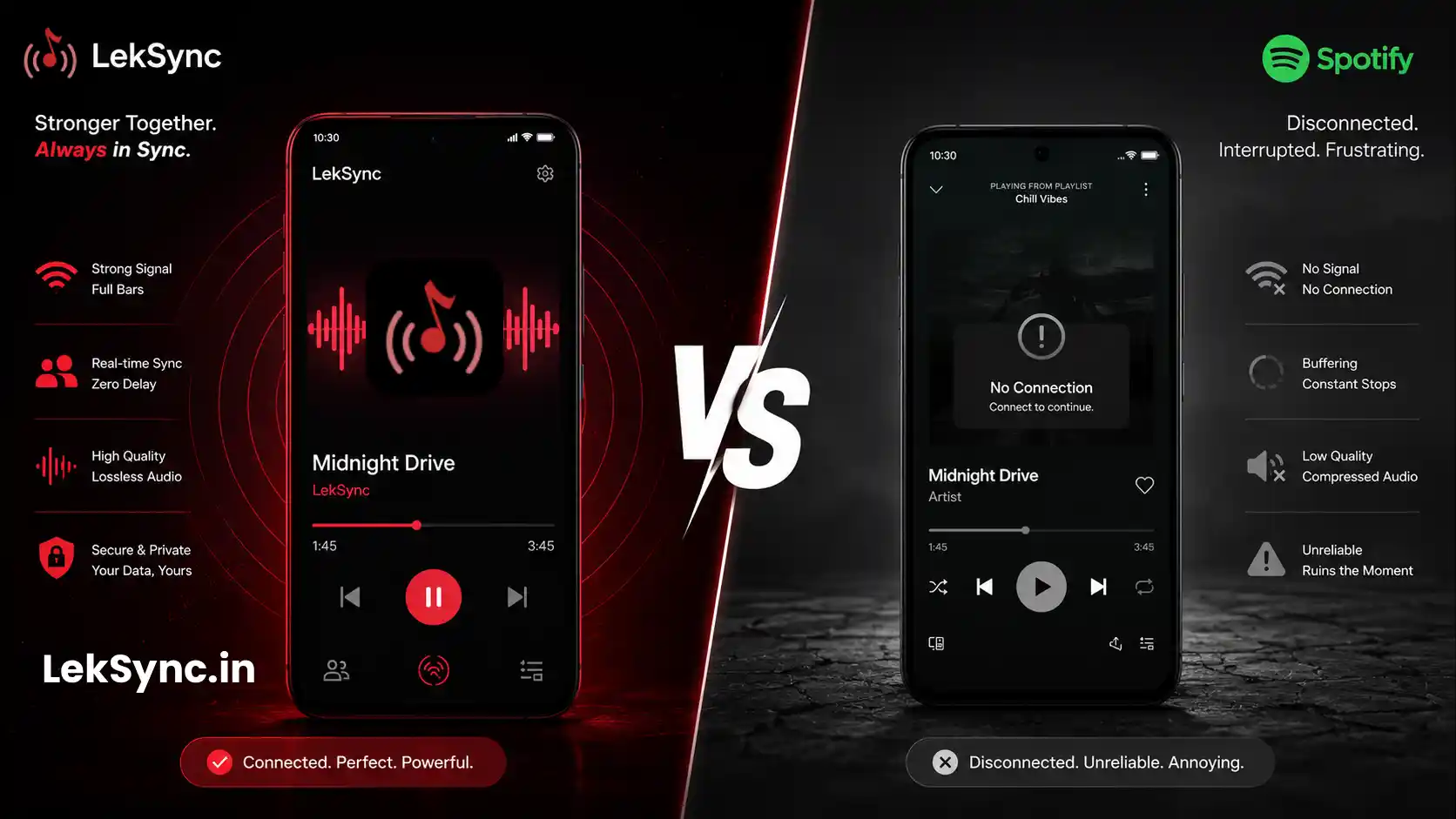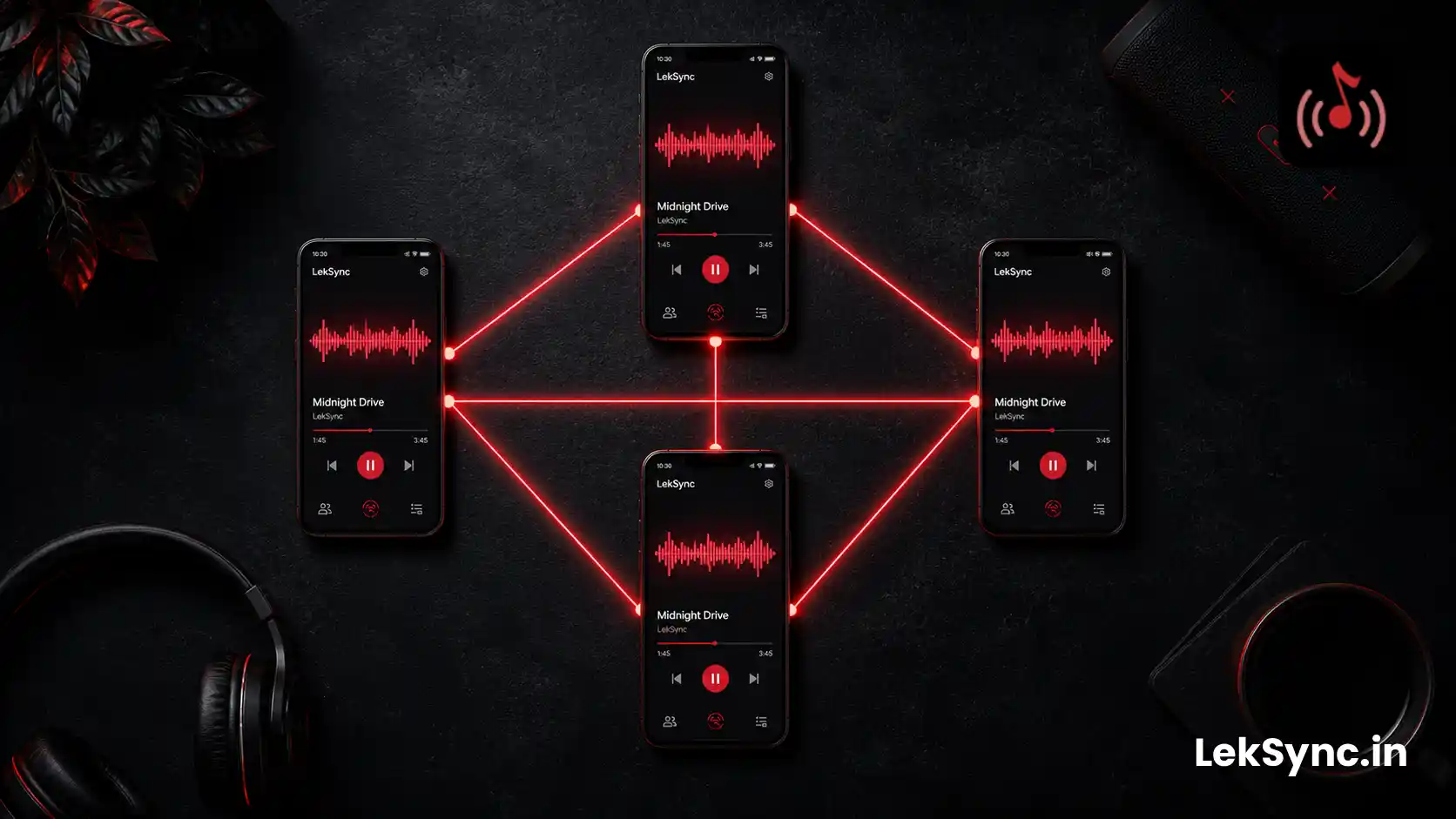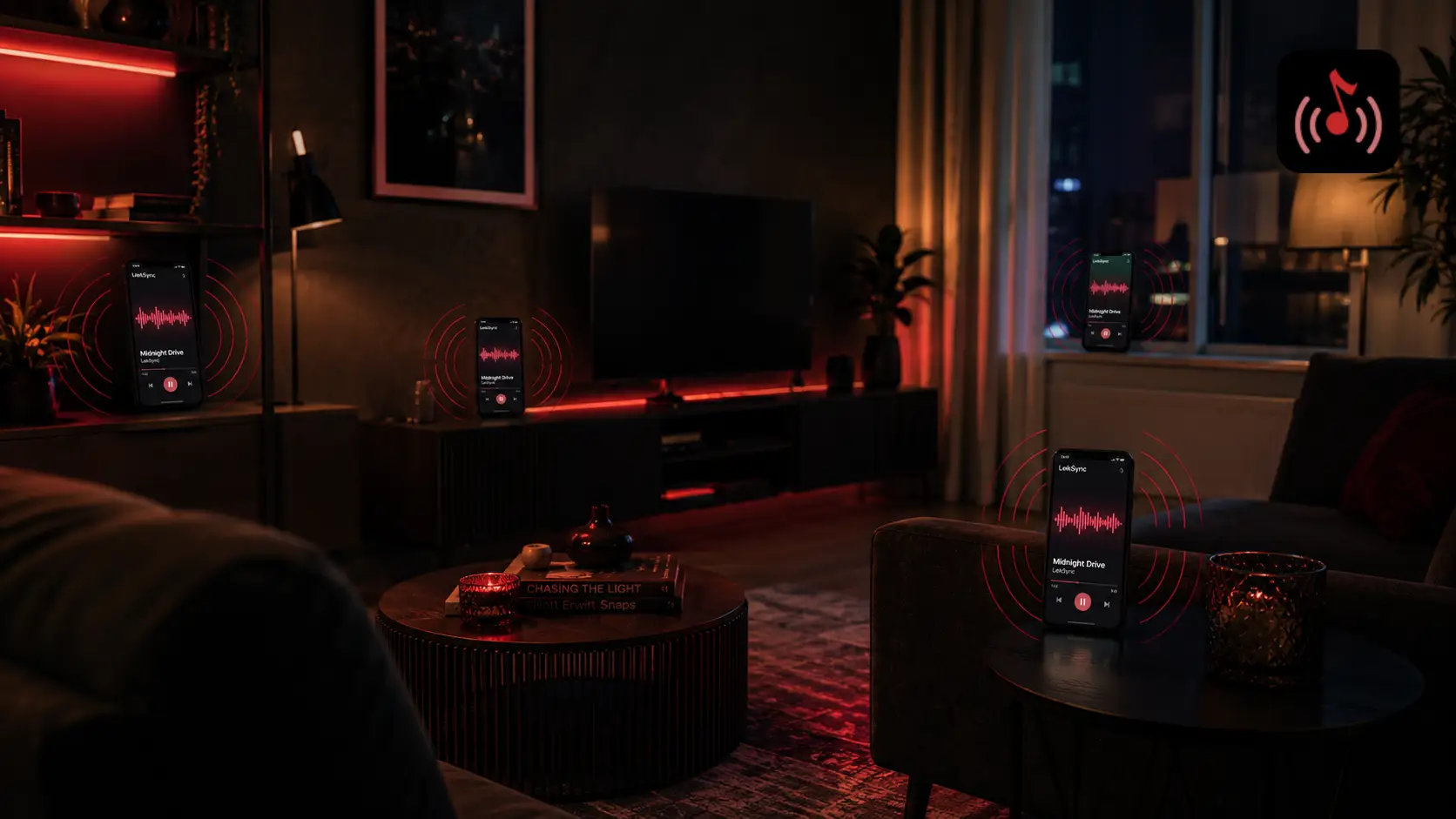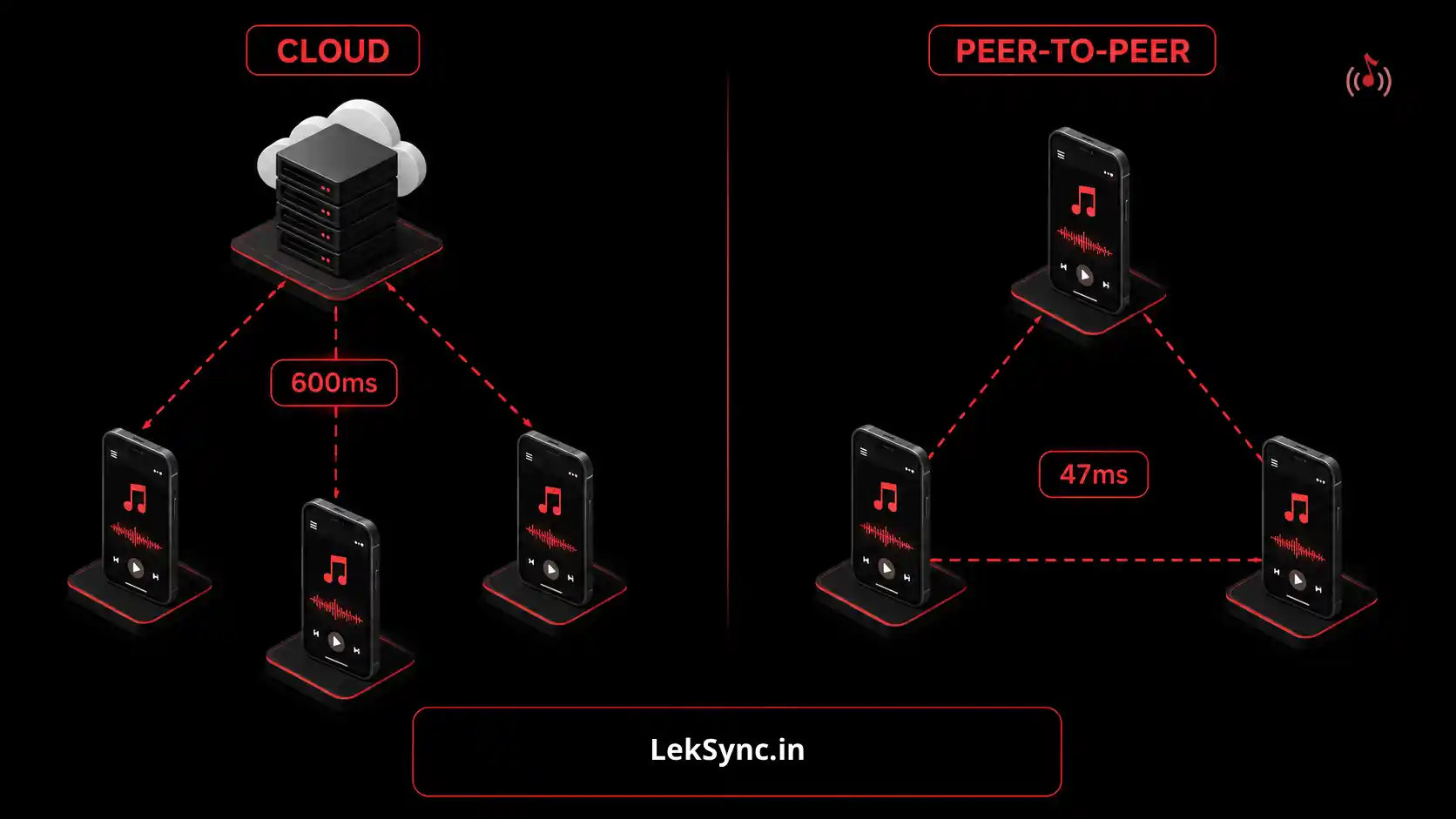
When you sync music across multiple devices using a cloud-based app, here's what happens: the host's phone sends audio to a server somewhere. The server processes it, possibly re-encodes it, and then transmits it to each receiver. Each receiver waits for the server to deliver the audio before playing it. The loop is: host → server → receiver.
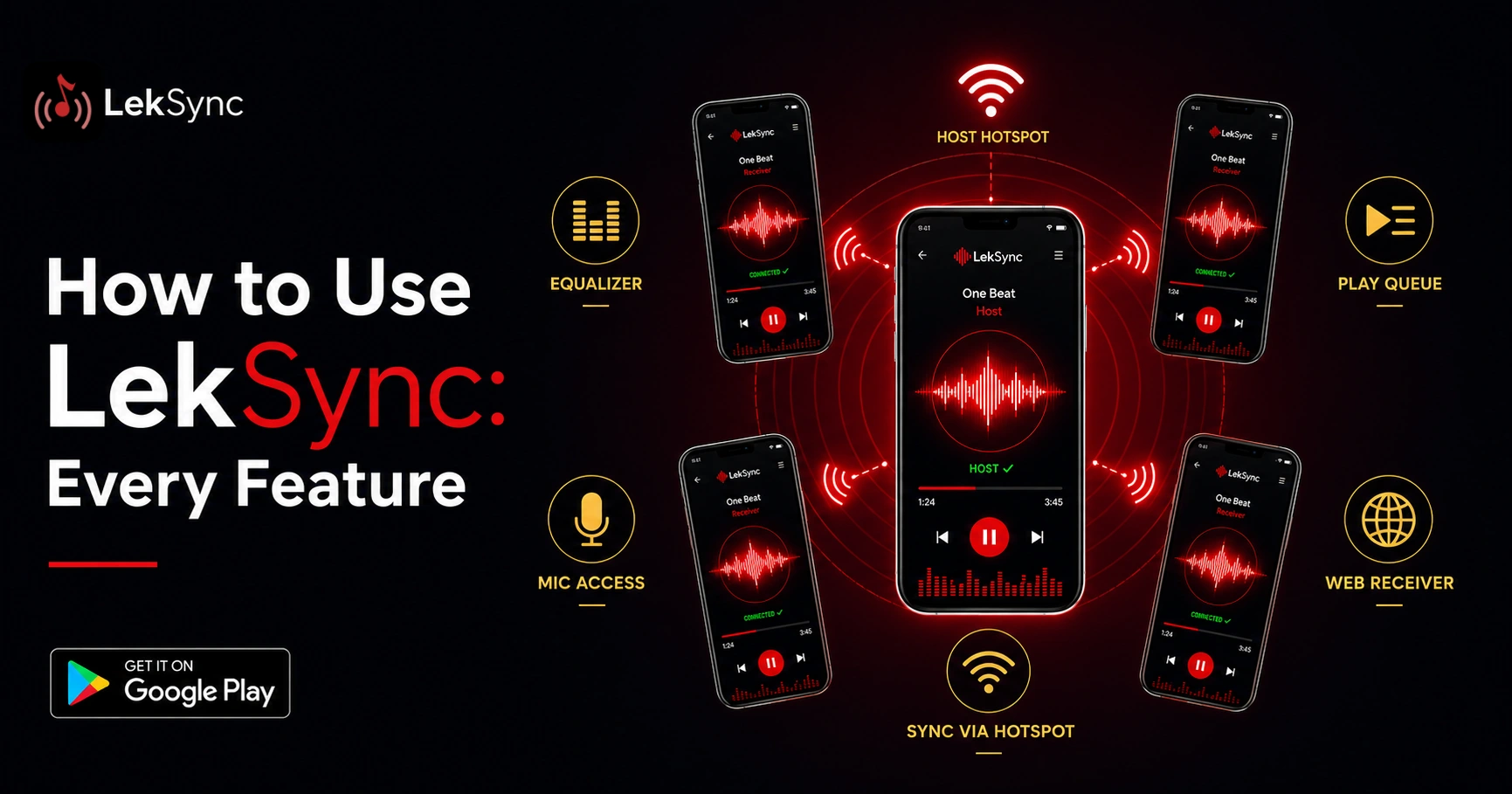
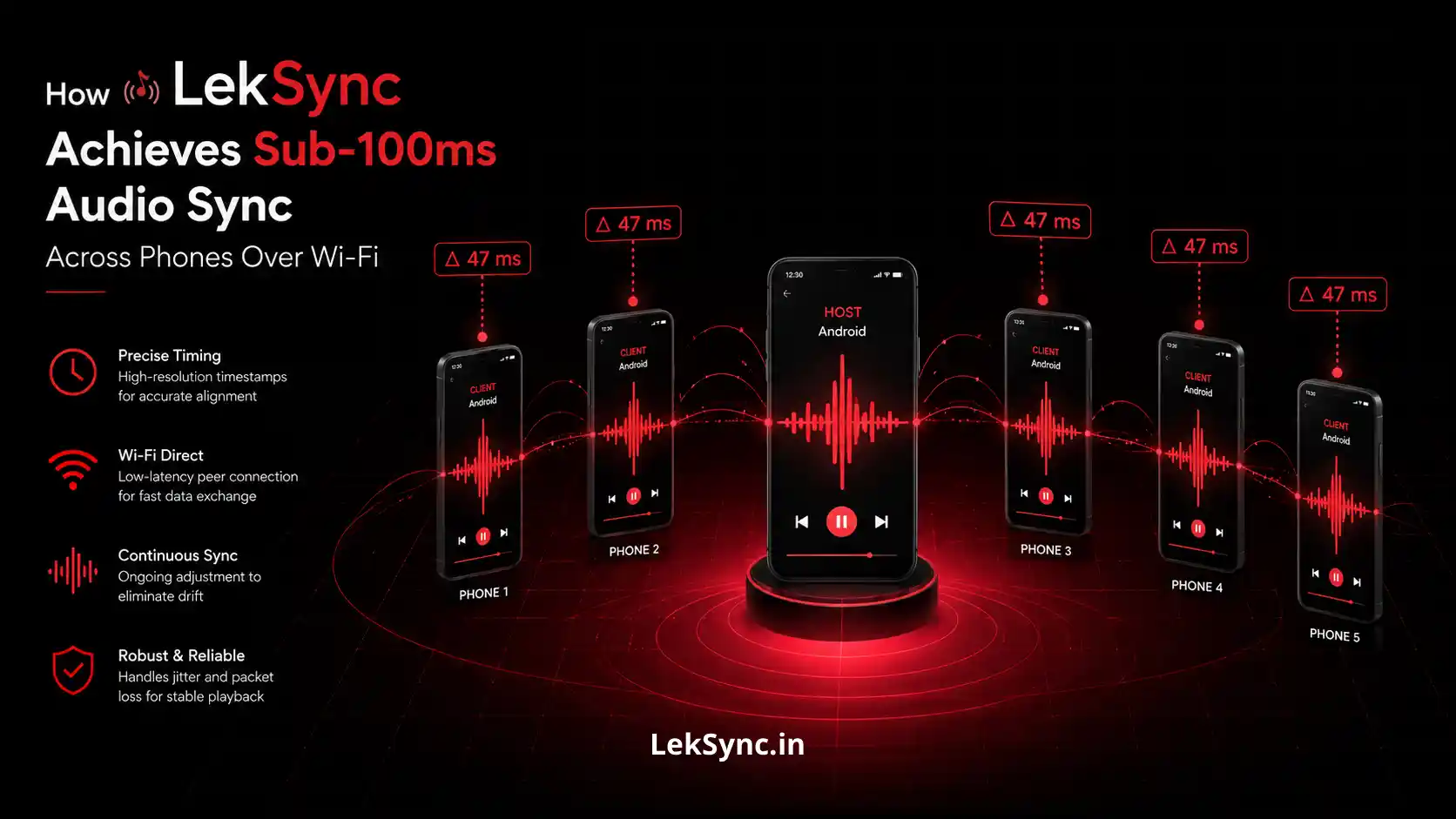
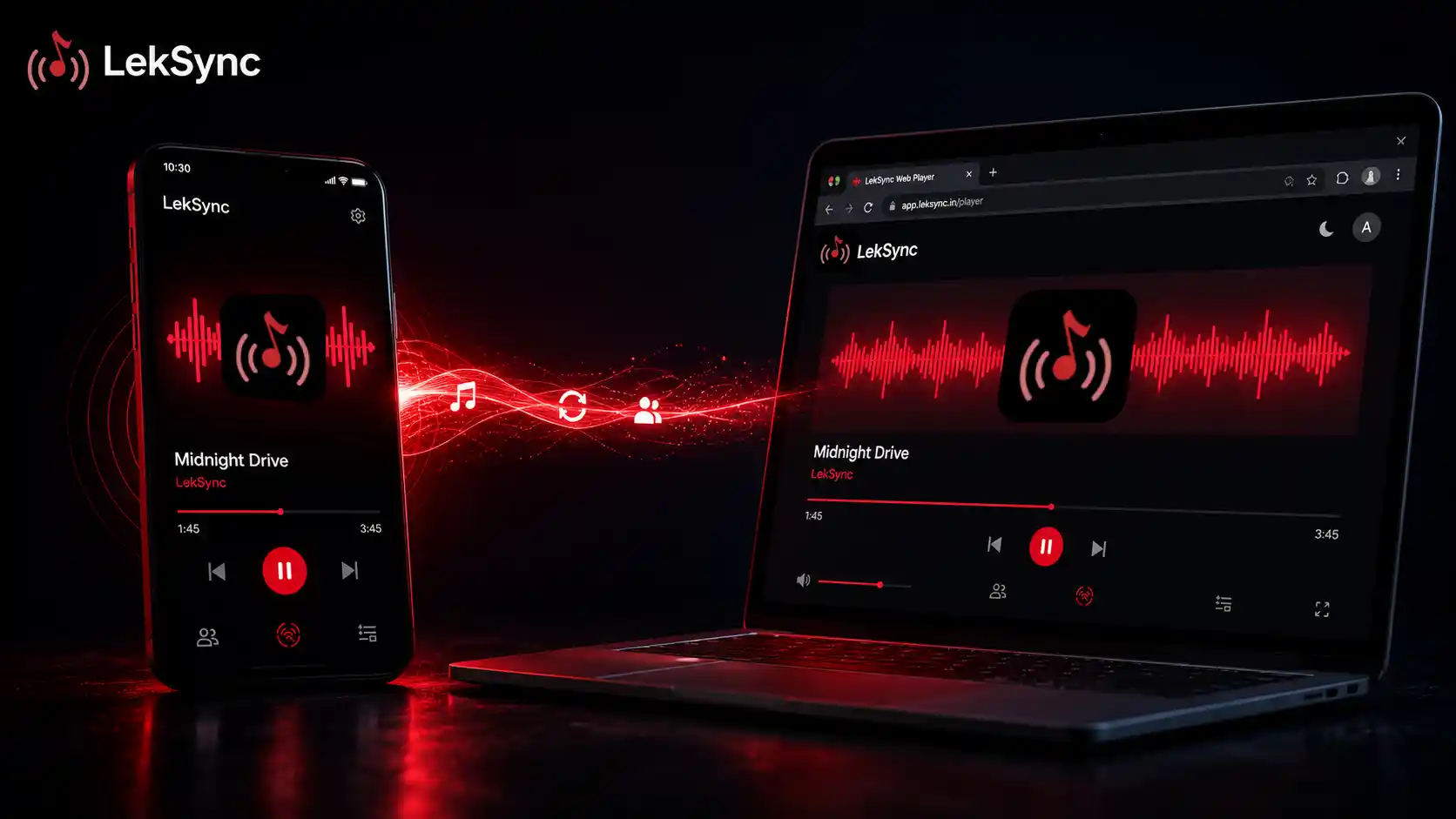
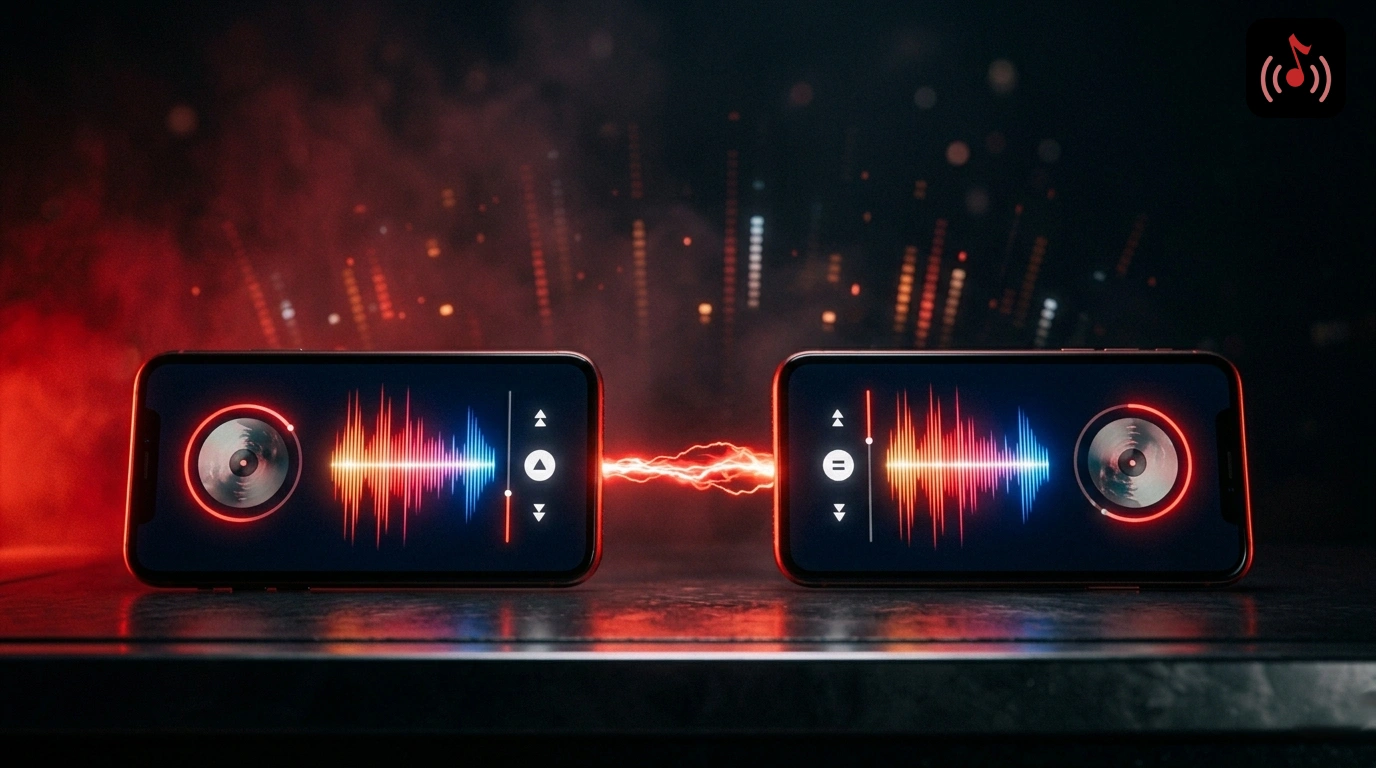
When LekSync streams in hotspot mode, the loop is: host → receiver. That's it. No server in the middle.
This architectural difference is why peer-to-peer wins for real-time music sharing, and why the cloud approach hits a latency ceiling that no amount of server optimization can overcome.
The Latency Math
Cloud-based sync adds latency at every hop:
- Host phone to cloud server: 20–200ms (varies by geography, network conditions, server load)
- Server processing time: 10–50ms
- Server to receiver phone: 20–200ms
- Total one-way latency: 50–450ms
Peer-to-peer on a local network:
- Host phone to receiver phone (same hotspot, same room): 1–15ms
- No server processing step
- Total one-way latency: 1–15ms
The difference is 10–30x. For syncing two devices to within 100ms of each other — the threshold below which human ears can't detect the offset — cloud sync is genuinely difficult. Local P2P makes it trivial.
Why Human Hearing Makes This a Hard Problem
The human auditory system is extraordinarily precise. Research places the threshold for perceiving two sounds as simultaneous at 10–30ms depending on frequency and context. For music with a strong beat — anything with drums, bass, or a clear rhythmic pattern — offset above 20ms is audible as an echo.
For a cloud system to keep multiple receivers within 20ms of each other, every receiver must have nearly identical latency to the server at all times. In practice, different receivers are on different networks with different signal quality — some on Wi-Fi, some on 4G, some with weak signal. The latency spread between receivers on a cloud system can easily be 200–400ms.
A local peer-to-peer system where everyone is on the same Wi-Fi hotspot has uniformly low latency across all receivers. There's almost no spread. Synchronization is a solved problem.
No Internet, No Problem
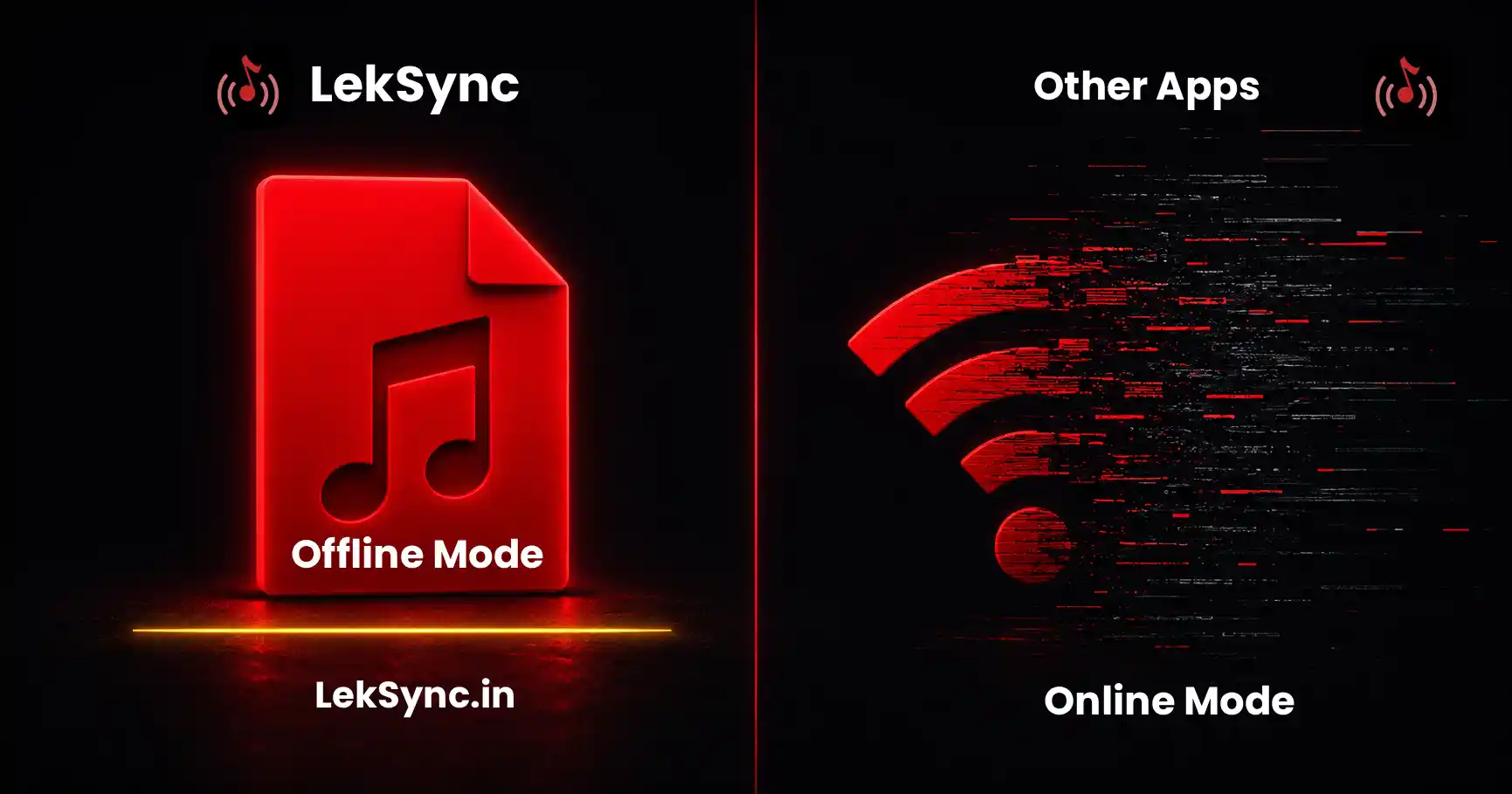
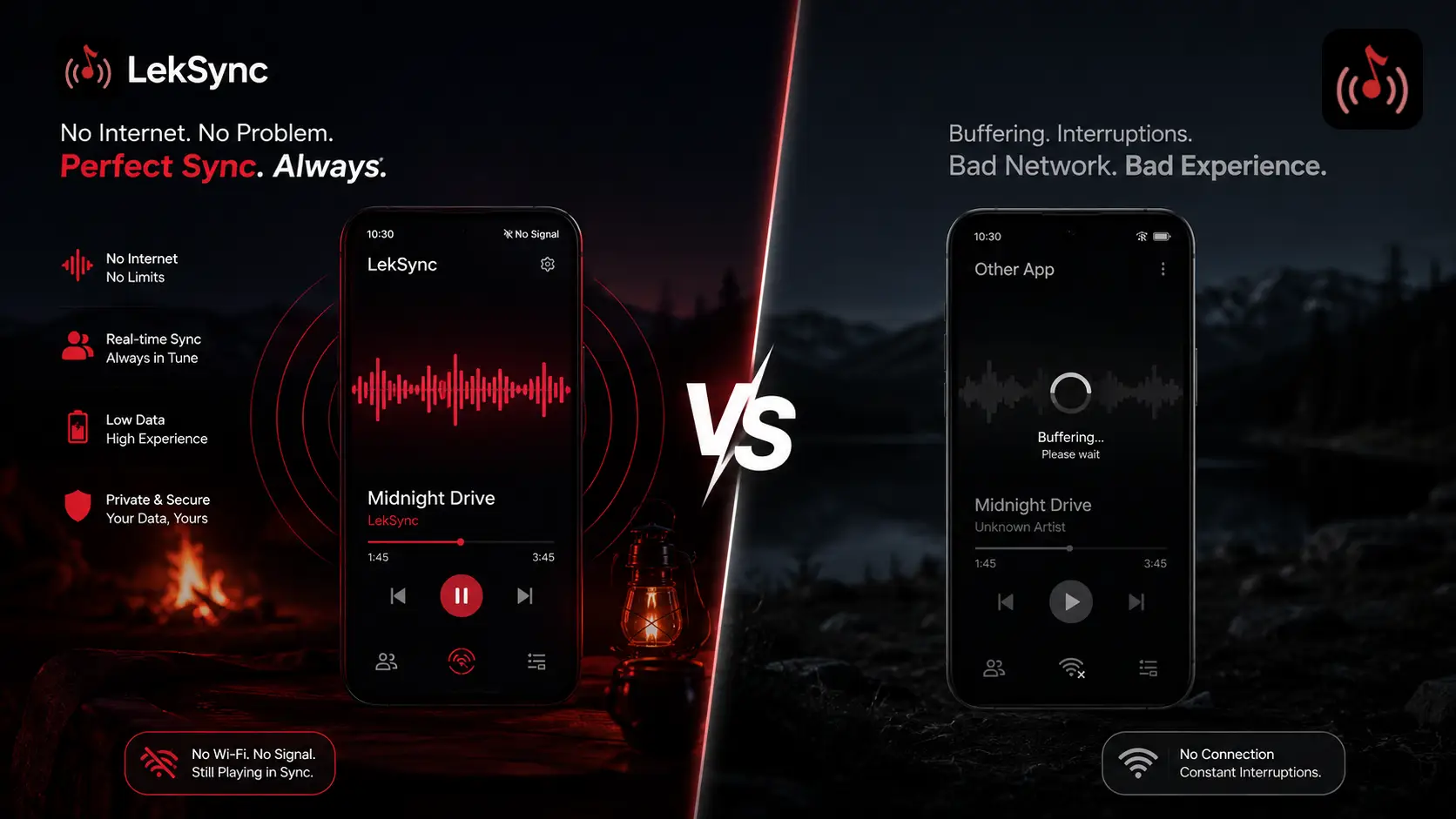
The secondary advantage of true P2P is independence from internet availability. LekSync's hotspot mode requires no internet connection whatsoever — the host's phone creates a local network, receivers connect to it, and audio flows directly between devices.
Cloud-based sync requires every participant to have a working internet connection throughout the session. The moment one person hits a dead zone — a basement, a rural road, an area with congested towers — their sync breaks.
Use cases where this matters:
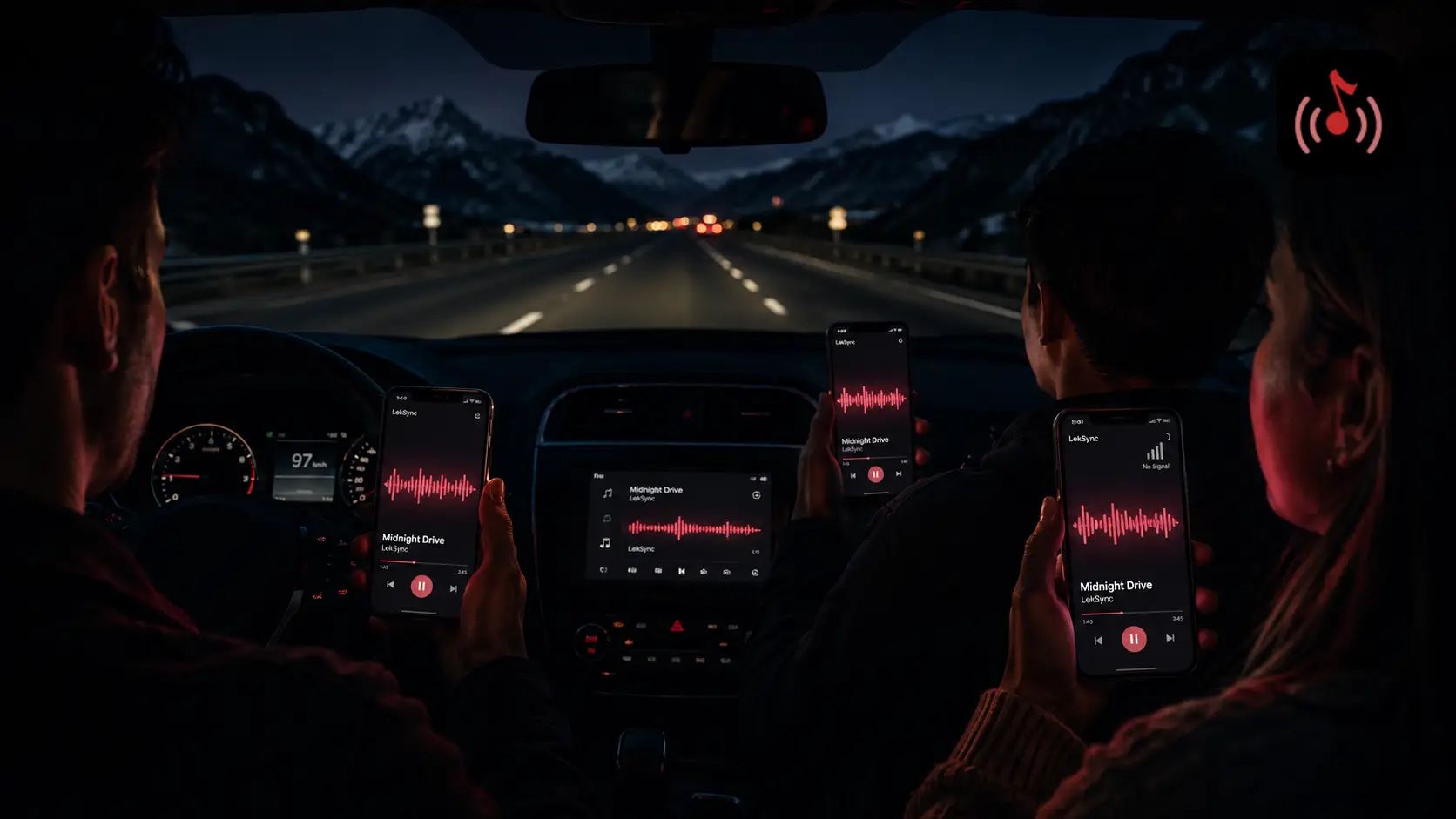
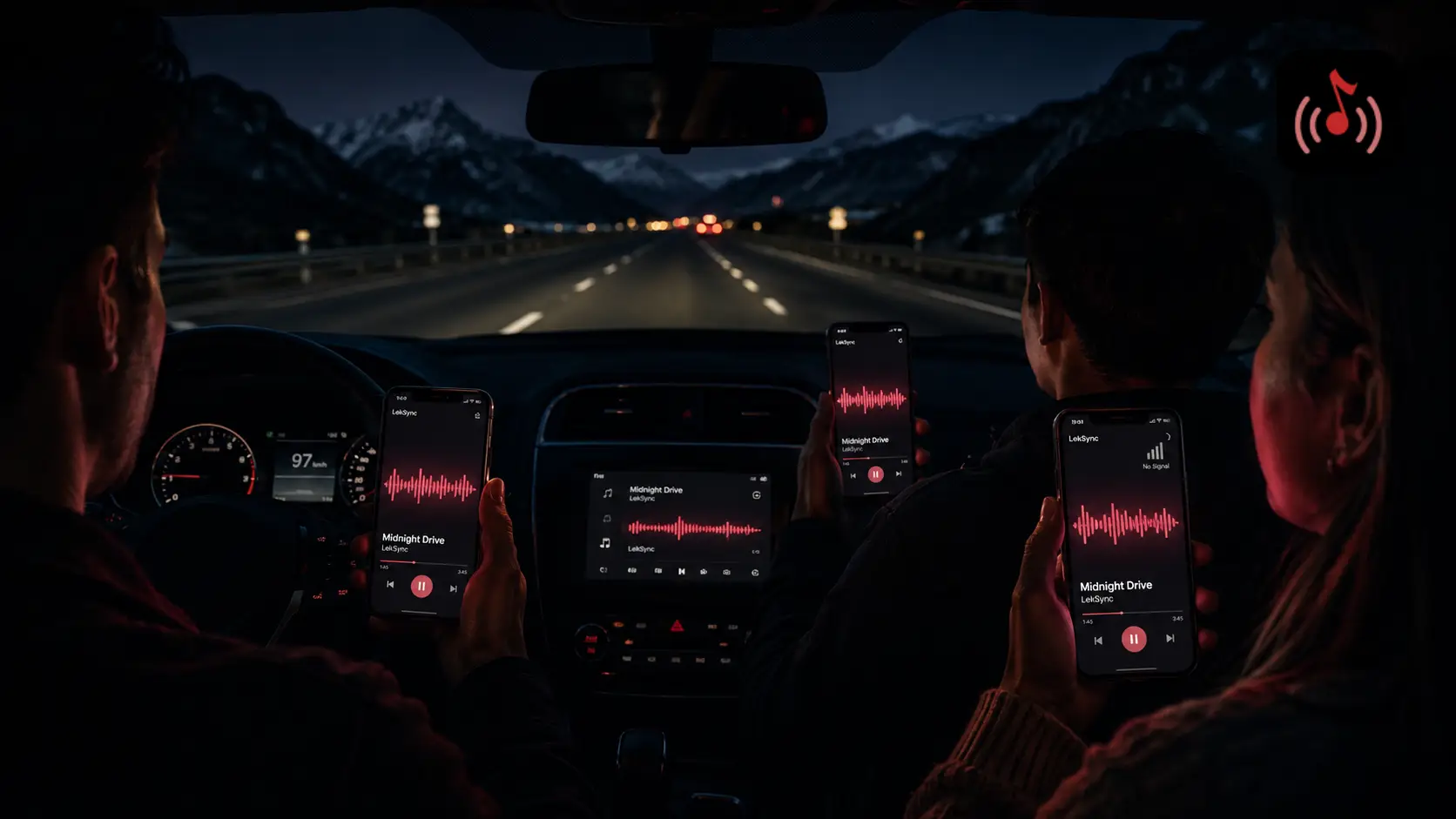
- Road trips on highways with intermittent cell coverage — see our guide on streaming music on a road trip without internet.
- Outdoor events in parks, beaches, or campsites far from cellular infrastructure.
- Underground or enclosed venues where mobile signal is weak.
- Congested event venues where tower capacity is saturated by thousands of attendees.
The WebRTC Bridge for Online Rooms
For groups that aren't co-located — friends in different cities, remote study groups — LekSync uses WebRTC for its Online Rooms feature. WebRTC is a peer-to-peer protocol: audio goes directly from the host to each receiver without passing through a server. The server is only involved in the initial handshake (exchanging connection information so the peers can find each other).
Once the session is established, the server drops out of the data path entirely. This is fundamentally different from cloud sync apps where the server is permanently in the audio path.
WebRTC adds more latency than local hotspot (because the packets travel across the internet, not a local network), but because there's no server processing hop, it's still significantly lower than cloud-relayed sync. LekSync's online rooms typically achieve 50–100ms total sync offset across devices in different cities — below the audible echo threshold for most music.
Privacy as a Byproduct
When audio is relayed through a cloud server, it passes through and could theoretically be logged, analyzed, or retained by whoever operates that server. With peer-to-peer, audio never touches a third-party server. It goes from one device to another, encrypted in transit using the WebRTC stack's built-in DTLS-SRTP encryption.
For most users this isn't a primary concern — but it's a meaningful difference when you're sharing personal or locally-owned music rather than content from a streaming platform.
Where Cloud Is the Right Choice
To be balanced: cloud sync makes sense when:
- You need to scale to thousands of simultaneous listeners (podcast streams, live radio).
- Exact millisecond sync doesn't matter — a podcast shared with 50 listeners where everyone is a minute or two behind is fine for that use case.
- The participants are spread across many different networks with no common local network anchor.
For small-group real-time music sharing — parties, road trips, study sessions, silent discos — peer-to-peer is categorically superior. The latency advantage is structural, not an implementation detail that cloud can eventually optimize away.
The Architecture Behind LekSync's Sync Quality
LekSync's local streaming uses UDP (User Datagram Protocol) rather than TCP. TCP guarantees packet delivery by retransmitting lost packets — which adds latency whenever a packet is dropped. UDP sends packets and moves on, accepting occasional drops. For real-time audio, a brief gap (dropped packet) is far less disruptive than a stream stall (TCP retransmission). LekSync's framing layer handles dropped packets gracefully, making UDP the correct choice for sub-100ms targets.
For a deeper look at the technical implementation, see our post on how LekSync achieves sub-100ms audio sync over Wi-Fi.
Try the Difference
If you've used cloud-based music sync apps and noticed the echo problem — especially at parties or outdoors — that's the latency architecture at work. P2P removes the root cause.
Download LekSync free on Google Play. Hotspot mode works offline, no server required.